Our Approach
At the heart of our work is Data Democracy - an approach that puts communities at the centre of producing data about their own lives, while we provide the technical support to make sure it’s rigorous and credible.
We do this through four pillars:
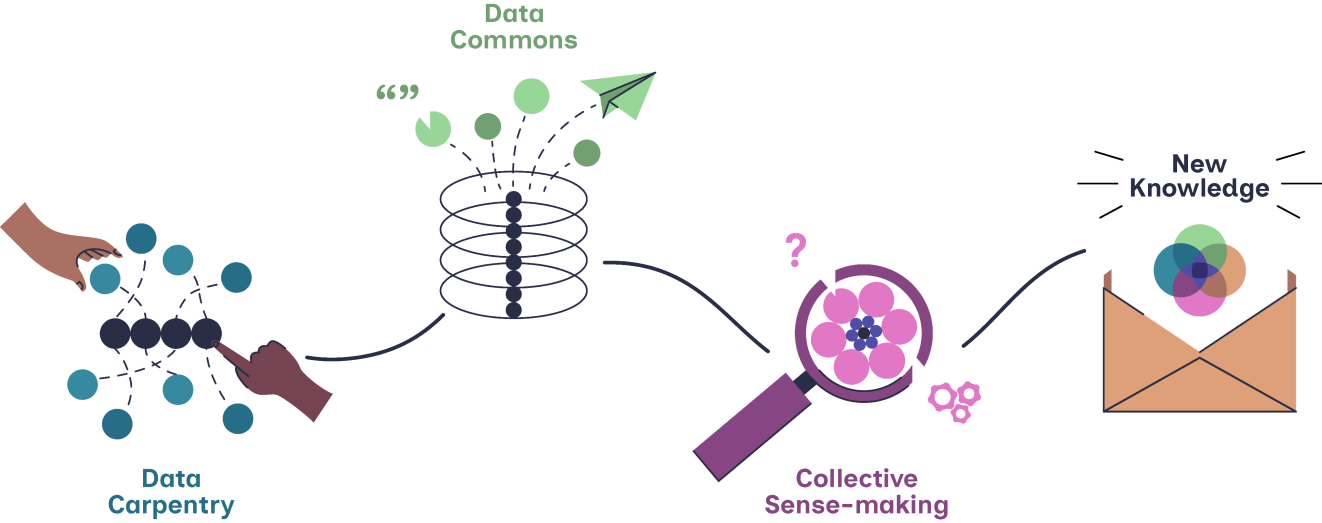
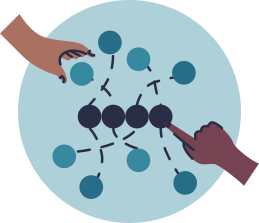
Data Carpentry
We transform messy data into clean, useful formats for civic and academic use, and harmonise disparate datasets to produce new insights.

Collective Sense-making
We work with communities to interpret what the data means and identify where change is possible. Data doesn’t speak for itself—it requires human interpretation, and communities bring essential context that researchers working alone often miss. Together, we uncover patterns, challenge assumptions, and pinpoint opportunities for change.

Data Commons
All our data and code are shared openly so others can build on our work, challenge our findings, and adapt our methods to their own contexts. We create compelling visualisations that make complex data accessible, turning numbers into stories that communities can use to advocate for change.

New Knowledge
Through integrating data carpentry, collective sense-making, and data commons, we create original research that fills critical gaps in understanding marginalised communities’ experiences. Our community-informed approach produces insights that traditional research methods often miss, employing rigorous qualitative and quantitative methods guided by community priorities. These findings are published in academic journals, policy reports, and community briefings to ensure they reach all the audiences who need them.
How We Work with Communities
With communities, we work through a shared process. We start by listening so that research questions are grounded in lived experience and local priorities. We then identify, unlock or generate the data needed and move through cycles of analysis and collective interpretation. We bring technical rigour, while communities shape meaning how findings are used.
How We Work with Institutions
With funders, research bodies, commissioners and policymakers, we take on different roles depending on the context. We act as:
Delivery partner: Leading community-centred projects
Evaluation partner: Applying Data Democracy as an evaluation approach
Advisor and critical friend: Strengthening research design and inclusive practice
How Change Happens
We create change by shifting who shapes knowledge and how it is used. Communities move from data sources to knowledge holders, evidence becomes both credible and legitimate, and institutions adopt more inclusive and accountable ways of working. Together, these shifts lead to more accurate understanding, more robust decisions and more effective, lasting change.
Our Theory of Change sets out this process in more detail. It is grounded in the idea of epistemic justice - where knowledge about marginalised communities is produced and used in ways that are inclusive, rigorous and accountable.